Discovery Arcade
Discovery Arcade, like its twin on the other side of the street, follows a dual logic: to provide guests with a covered walkway better suited to the European climate, and to ease crowd flow at park closing.
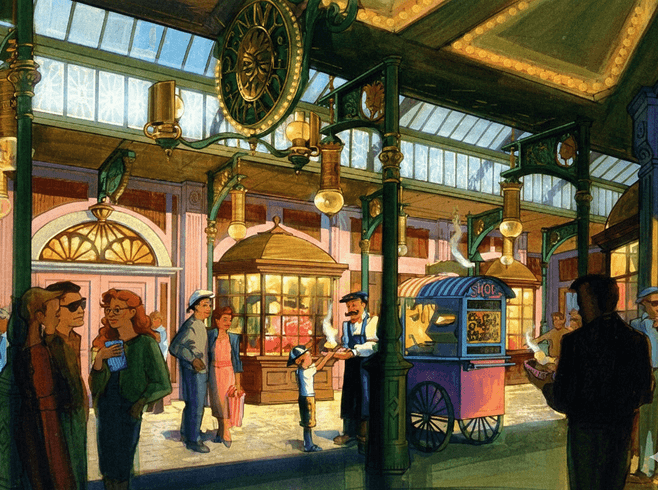
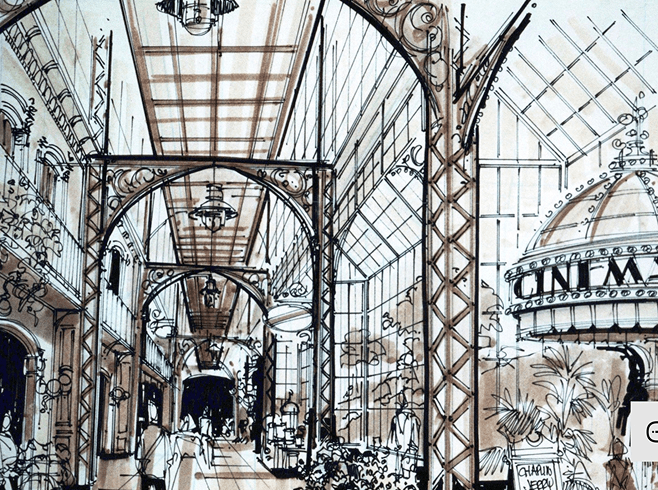
Arcades concept, drawn by Nina Rae Vaughn and Eddie Sotto
In the early versions of the project, Main Street, U.S.A. was meant to include an elevated train. Its return route passed through a covered gallery located exactly where you are standing.
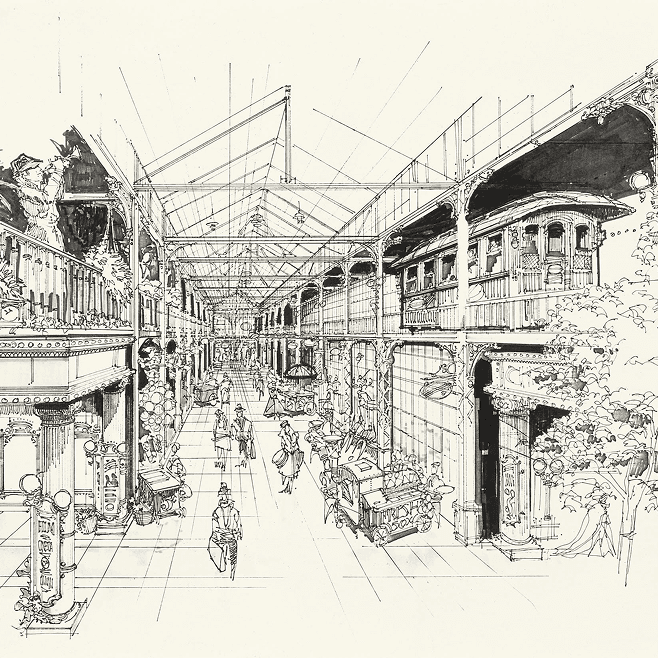
Concept of the passage with the elevated train, drawn by Eddie Sotto
Inspired by the covered passages of major European cities, this gallery was designed to create a transition between the street’s Victorian aesthetic and the inventors’ world of Discoveryland. A diorama presented a vision of the city of the future as imagined by designers at the time.
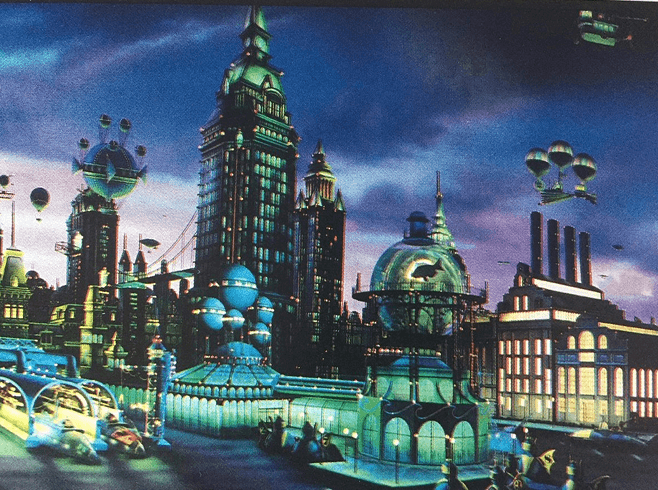
“City of the Future” model for the Power Plant attraction at Six Flags, Baltimore
From this initial project, only the idea of the covered passage was retained, the rest considered too expensive. Even this solution raised concerns. The concept of a covered arcade was seen as too European and not fully aligned with the American setting. With well documented examples, Eddie Sotto managed to justify its inclusion..
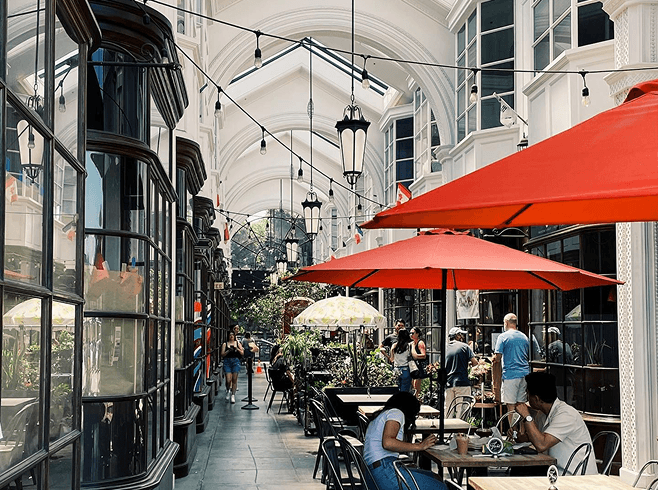
The Burlington Arcade in Pasadena, California, was used as a reference to support the idea of a covered passage
The large posters now visible on the walls of Discovery Arcade are the last traces of what had originally been imagined. They pay tribute to those early intentions and highlight inventors of the past.
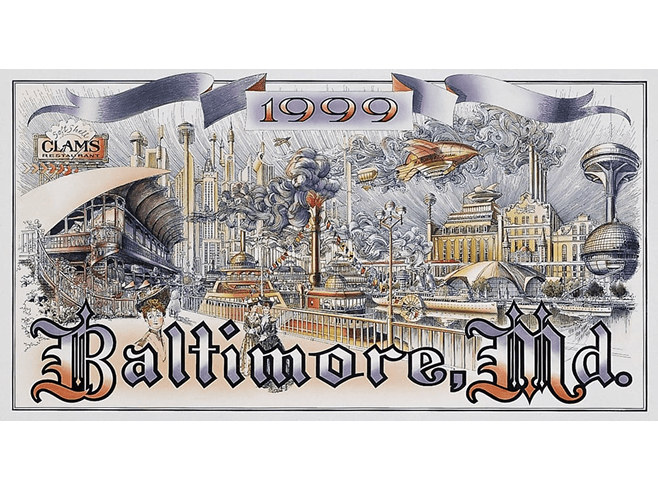
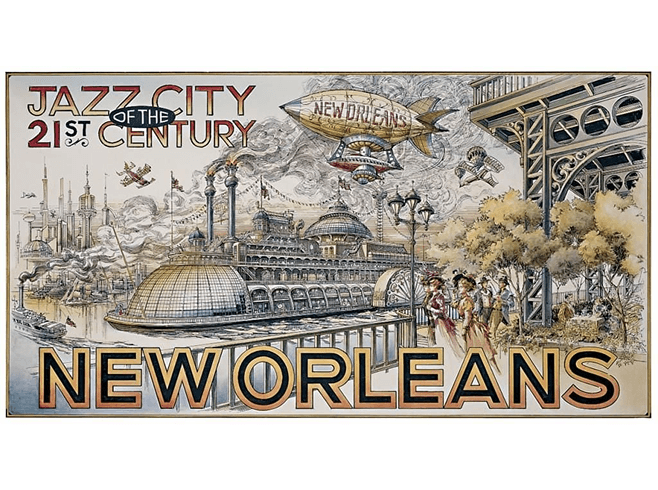
Some of the posters displayed in Discovery Arcade
The display windows extend this narrative by presenting objects, patents, and visions of the future, often connected to immigrant inventors, reminding visitors that American progress was built through the contributions of multiple cultures.
Discovery Arcade thus turns a simple covered walkway into a space of intellectual transition, a place where Main Street, U.S.A. begins to look toward tomorrow.