City Hall
In its first version, the role of the building was rethought by Eddie Sotto and his team. City Hall had to remain a clear landmark for guests, but also become a ceremonial space. It was imagined as a kind of Disney embassy in Europe, meant to embody the link between the United States and France.
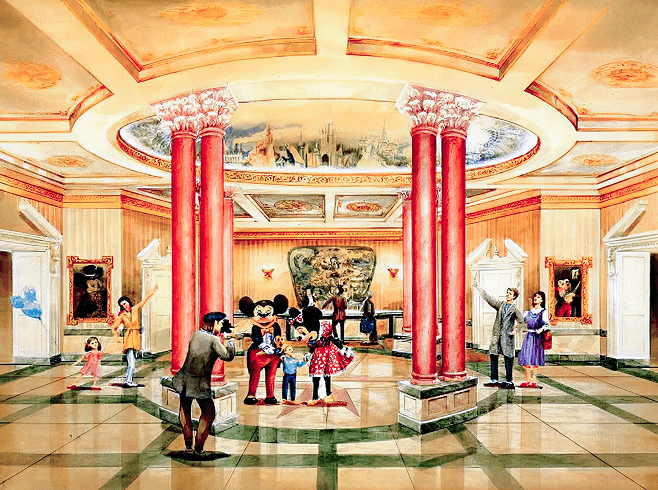
Interior concept of City Hall, drawn by Barbara Wightman
With the return to a Victorian version, the building went back to a more traditional reading of its function. One constraint remained: it had to incorporate covered walkways without breaking the illusion of authenticity.
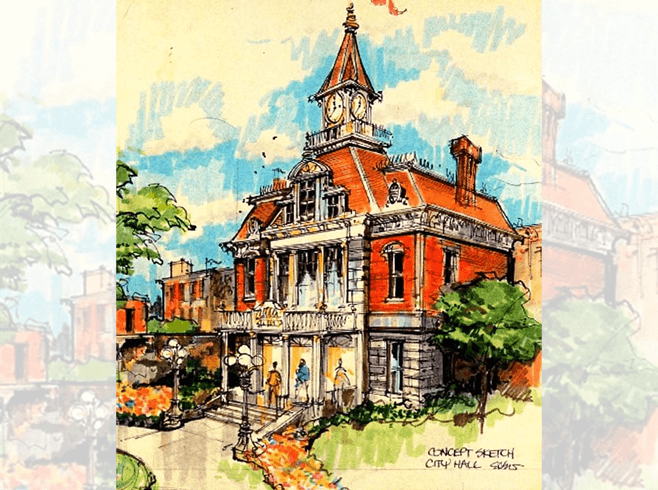
City Hall concept, drawn by Eddie Sotto
The ground floor arches were the response to that requirement. It was a solution that never fully satisfied Eddie Sotto, as he later admitted. He considered the extension too heavy and historically inaccurate, but chose to accept it.
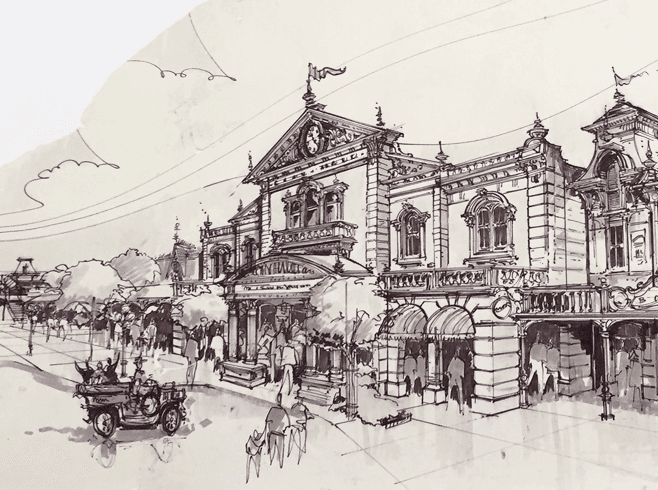
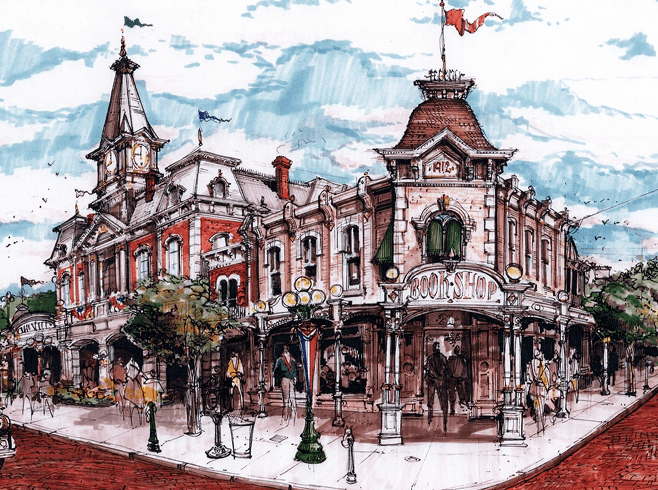
City Hall concept, drawn by Eddie Sotto
The overall architecture blends Victorian and neoclassical references to assert clear civic authority. Its tower, inspired by the former Western Union Tower in New York, serves as a vertical landmark on Town Square.
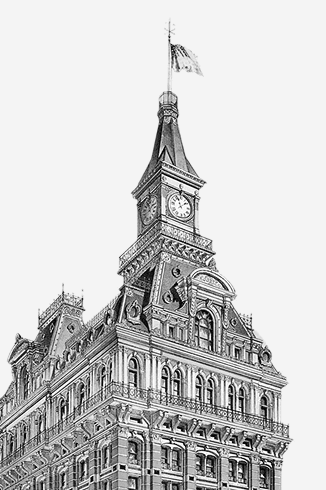
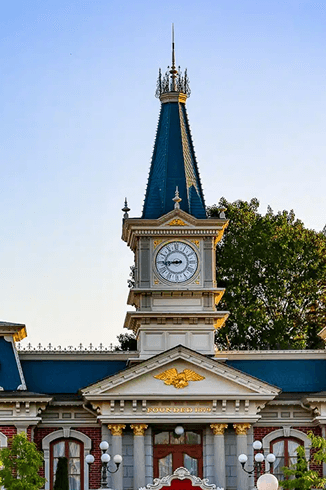
Comparison between an engraving of the Western Union Tower and the City Hall tower at Disneyland Paris
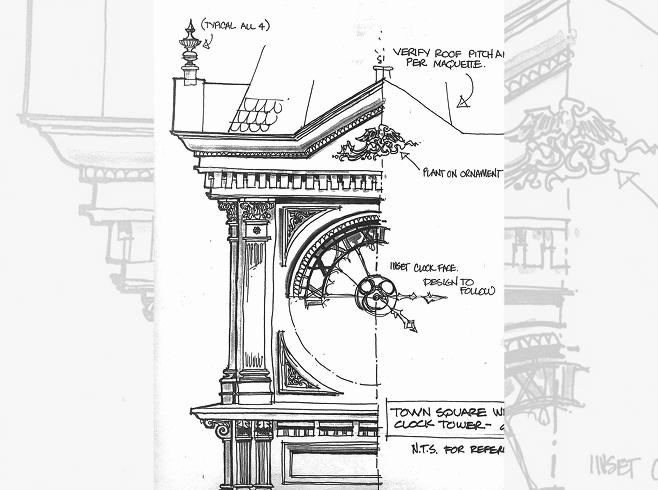
Clock dial drawing, created by Eddie Sotto
Inside, the atmosphere draws inspiration from Independence Hall in Philadelphia, a foundational site of American democracy.
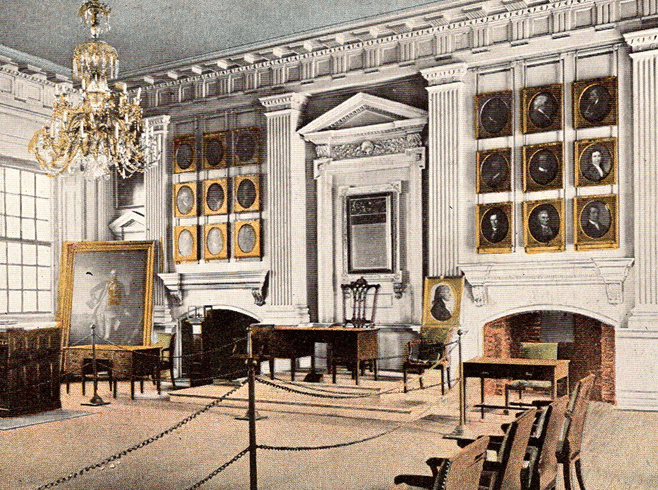
Interior of Independence Hall
The décor highlights the relationship between Disney and France, as well as the story of the creation of Euro Disney, presented as a shared project between two cultures.
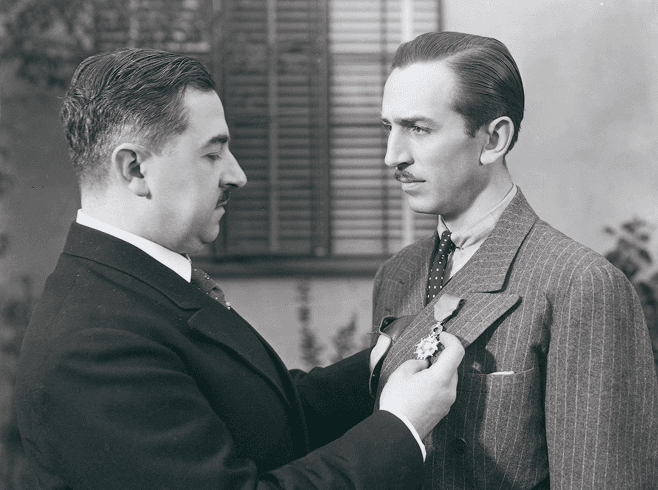
Photos displayed in City Hall showing Walt receiving the Legion of Honor